On the roadKöln
Parking a hired van inside the Ringe, overnight and otherwise
All year
Almost every car park inside the Ringe has a barrier at around two metres, which excludes anything bigger than a medium panel van. That single fact reshapes a van hire in central Cologne: where you can stand while loading, where the vehicle sleeps, and why the answer is usually to collect it from outside and keep it outside.
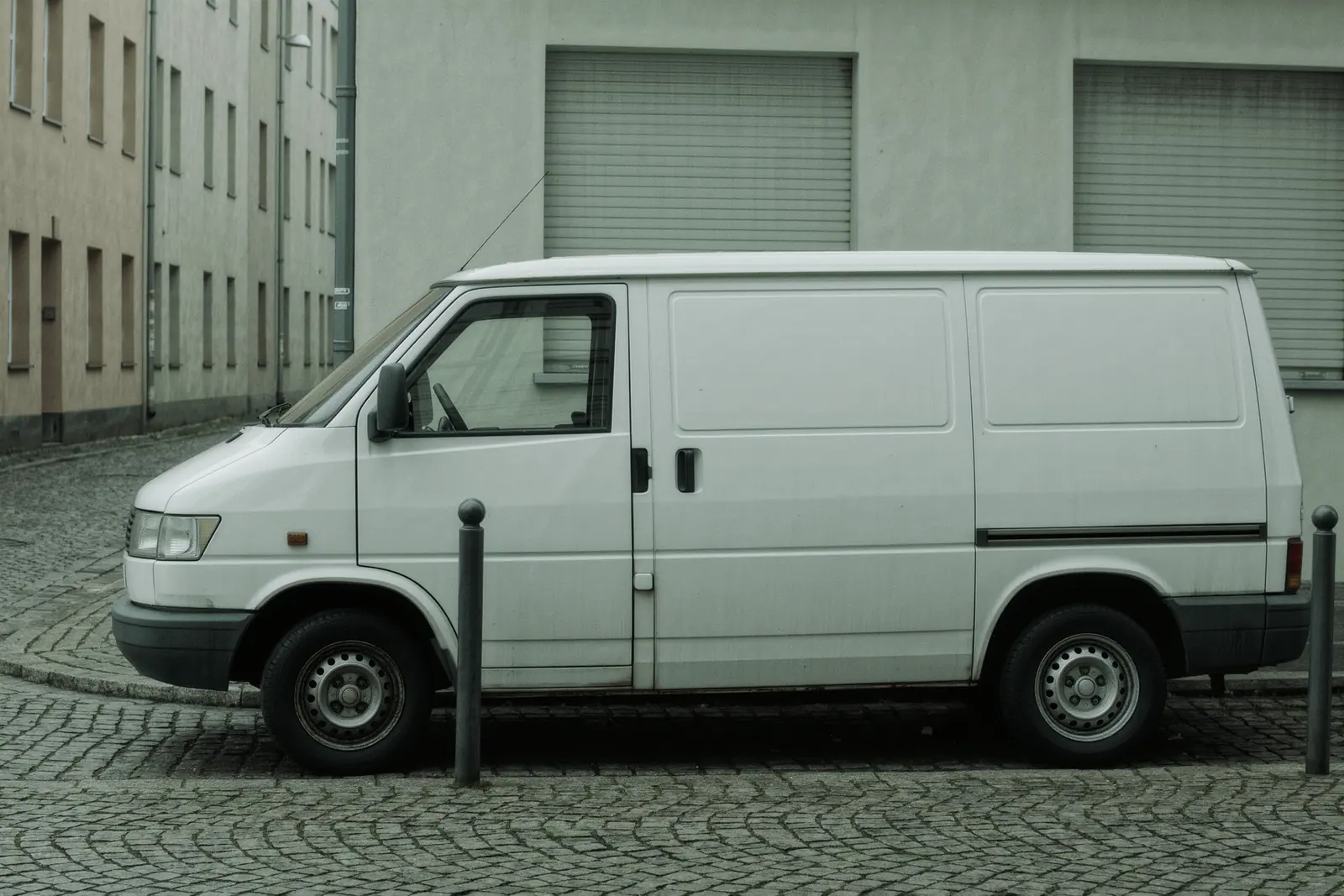
There is one measurement that decides most of what follows: the height barrier. Underground and multi-storey car parks in central Cologne almost all sit at or under two metres, and the shortest thing anyone would call a proper van is around two and a half. So the moment you book anything above a car-derived van, every covered parking option inside the Ringe disappears at once.
Everything else — resident zones, loading bays, kerb reservations, carnival — is downstream of that.
The height table, and why it matters more than volume
| Vehicle | Rough height | Car parks inside the Ringe | Where it sleeps |
|---|---|---|---|
| Car-derived van | 1.8–1.9 m | Most, just | Anywhere a car goes |
| Medium panel van, low roof | 2.0–2.2 m | A handful, check each | Street, outside resident zones |
| Long wheelbase, medium roof | 2.5 m | None | Street or an open lot |
| High roof or box body | 2.8–3.2 m | None | Depot, or outside the city |
People choose vans by load volume and then discover the height. Reverse the order. If the job can be done in two trips with a medium van that fits somewhere, that is usually a better week than one trip with a vehicle that has nowhere to stand.
Note also that barrier damage sits outside basic cover in a large share of rental agreements, along with the roof generally. Hitting a barrier with a hire van is both very easy and very expensive.
Where a van can legally stand
Four situations, and they are different from each other.
- Loading, briefly, in a marked loading bay. Legitimate, time-limited, enforced. Fine for a delivery, useless for a move.
- Ordinary street parking outside a resident zone. The standard answer for a working day. In the central districts these spaces are scarce and the streets are narrow, and a long van needs a gap most cars would not need.
- A resident zone with visitor provision. Read the sign. Limits are commonly short and vehicle-length conditions sometimes apply. A hire van cannot hold a resident permit.
- A reserved length of kerb you applied for. The only way to guarantee space outside a specific address. It requires an application to the city road authority and a notice period before the signs go up, which is set out in the kerbside permit article.
Rules, zone boundaries and permitted stays are set by the city and revised from time to time. Check the signage on the street and the current rules with the authority rather than working from an app.
The overnight question
This is what actually determines whether a central van hire is pleasant or miserable, and it has three sensible answers.
Return it the same evening. By far the best option where the work fits into a day. It also avoids paying for a second day, which most contracts will charge if the van comes back the next morning.
Collect from outside and keep it outside. Take the van from a depot on the right bank or beyond the ring road, drive in to load, drive out to park. The extra driving is fifteen to twenty-five minutes each way and it removes the problem entirely.
Book an open lot in advance. Open-air parking exists on the industrial edges and around the right bank, and some sites take high vehicles. It is a phone call rather than an app booking, and it is worth making before the van is collected rather than at half past six with a loaded vehicle.
What does not work is hoping. A long van circling the Südstadt at nine in the evening looking for a legal space is one of the reliably bad experiences this city offers.
The damage that happens while parked
Urban van hire produces a particular pattern of charges, and almost all of it happens at walking pace.
Kerbing an alloy while squeezing into a short gap. Scraping a corner on a bollard reversing out of a narrow street. Catching a wing mirror on a parked car on one of the older streets where two vehicles genuinely do not pass. And the roof, which nobody inspects and which meets barriers, low branches and the entrance arches of courtyard buildings.
Photograph the van from all four corners, both mirrors and the roof at collection, in daylight, with the timestamp on. Then read what the cover excludes: roof damage, underside damage, mirrors and glass are outside basic cover in a large share of agreements, and those are exactly the four things a van collects in a dense city. If the hire is more than a couple of days, the excess reduction is worth more here than it would be on a motorway trip.
Carnival, which suspends all of the above
For six days in late winter the central districts stop being parkable in any sense. Temporary prohibitions go up along the procession routes from the night before, they are enforced, and vehicles are removed at the keeper’s cost. A hire van towed from a route becomes a recovery charge plus an administration fee from the rental company plus, frequently, a lost day.
The district processions on the Saturday and Sunday do the same thing in Ehrenfeld, Nippes, the Südstadt, Deutz and Mülheim, so staying out of the middle is not a strategy. The full picture is in van hire during carnival week.
The recommendation nobody wants
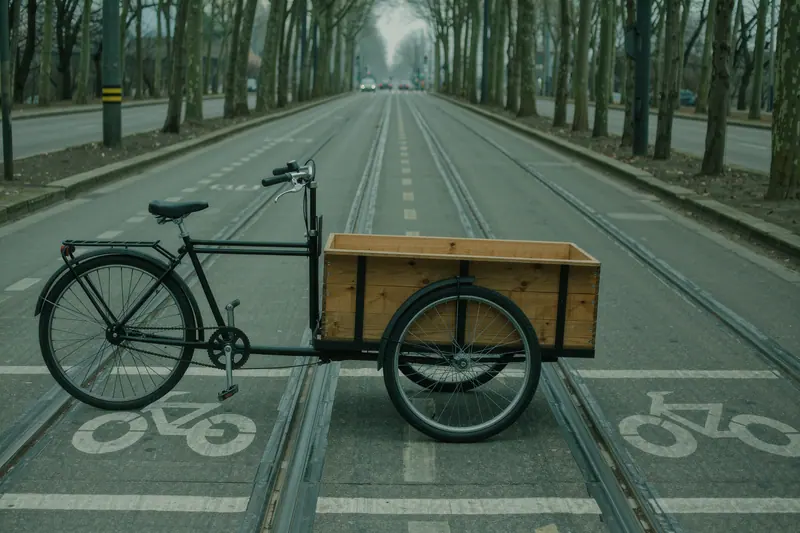
If the load is small and the distance short, do not hire a van for the central districts at all. There is no height barrier, no resident zone, no reservation and no towing risk on a cargo bike, and inside the Ringe the distances are small enough that several trips are quicker than one badly parked one. The case, with the numbers, is in cargo bike hire for the Ringe.
Where a van genuinely is required, book the smallest one the job allows, collect it from outside the Ringe, and get it back the same day. That single sequence solves more problems than any parking app.
What to check before you book
- Get the vehicle height from the rental company as a number, including any roof fittings, and write it on your hand. Barriers are unforgiving and the damage is not covered as standard.
- Check the parking rules for the exact street, not the district. Resident zones in Cologne change from block to block and the signs are the authority.
- Work out where the van sleeps before you book it. An overnight problem discovered at seven in the evening costs more than the hire.
- If you need a reserved length of kerb, apply to the city road authority with the required notice. A loading bay is not a reservation and cannot be held.
- Photograph the van from all four corners and the roof at collection. Kerb and barrier damage is the commonest charge on urban van hires.
- Avoid the last weekend of the month if you have any flexibility. Every kerb in the residential districts is contested on lease turnover days.
Questions people actually ask
- Can I park a hire van in a Cologne multi-storey car park?
Only if it is genuinely small. Barriers in the central car parks generally sit at or below two metres, which admits a car-derived van and excludes almost everything else. A few sites on the edge of the centre and some open-air lots take higher vehicles, but they are the exception and they are not where you want to be at the end of a loading day.
- Where can a large van park overnight in the centre?
Realistically, on the street outside a resident-only zone, or in an open lot on the industrial edge, or not in the centre at all. The practical answer that most people arrive at is to collect the van from a depot outside the Ringe, work with it during the day, and return it the same evening rather than solving the overnight question.
- Are loading bays a solution?
For loading, within the posted time limit, yes. They are not parking and they are actively enforced, because a blocked loading bay pushes deliveries into the traffic lane. Use them for the twenty minutes they are meant for and do not treat one as a base for the afternoon.
- What about resident parking zones?
Much of the Südstadt, the Belgian quarter, the Agnes quarter and inner Ehrenfeld operates resident schemes, with limited visitor provision and maximum stays. A hire van will not hold a resident permit. Read the sign at the exact spot, since the boundaries follow blocks rather than districts and change without much visual warning.
- Does any of this change during carnival?
Completely. Temporary parking bans go up along the procession routes from the night before, enforcement is active, and vehicles are removed. A hired van left on a route becomes a recovery bill plus an administration fee from the rental company. During those six days the central districts are not a place to leave a vehicle at all.