On the roadKöln
One-way van hire from Cologne, up and down the Rhine
All year
The Rhine corridor puts four sizeable cities within an hour of Cologne, which makes one-way van hire look obvious and often makes it a bad deal. When the drop fee beats a return trip, why the short hops rarely justify it, what the small car ferries north of the city can and cannot take, and where the contract stops you.
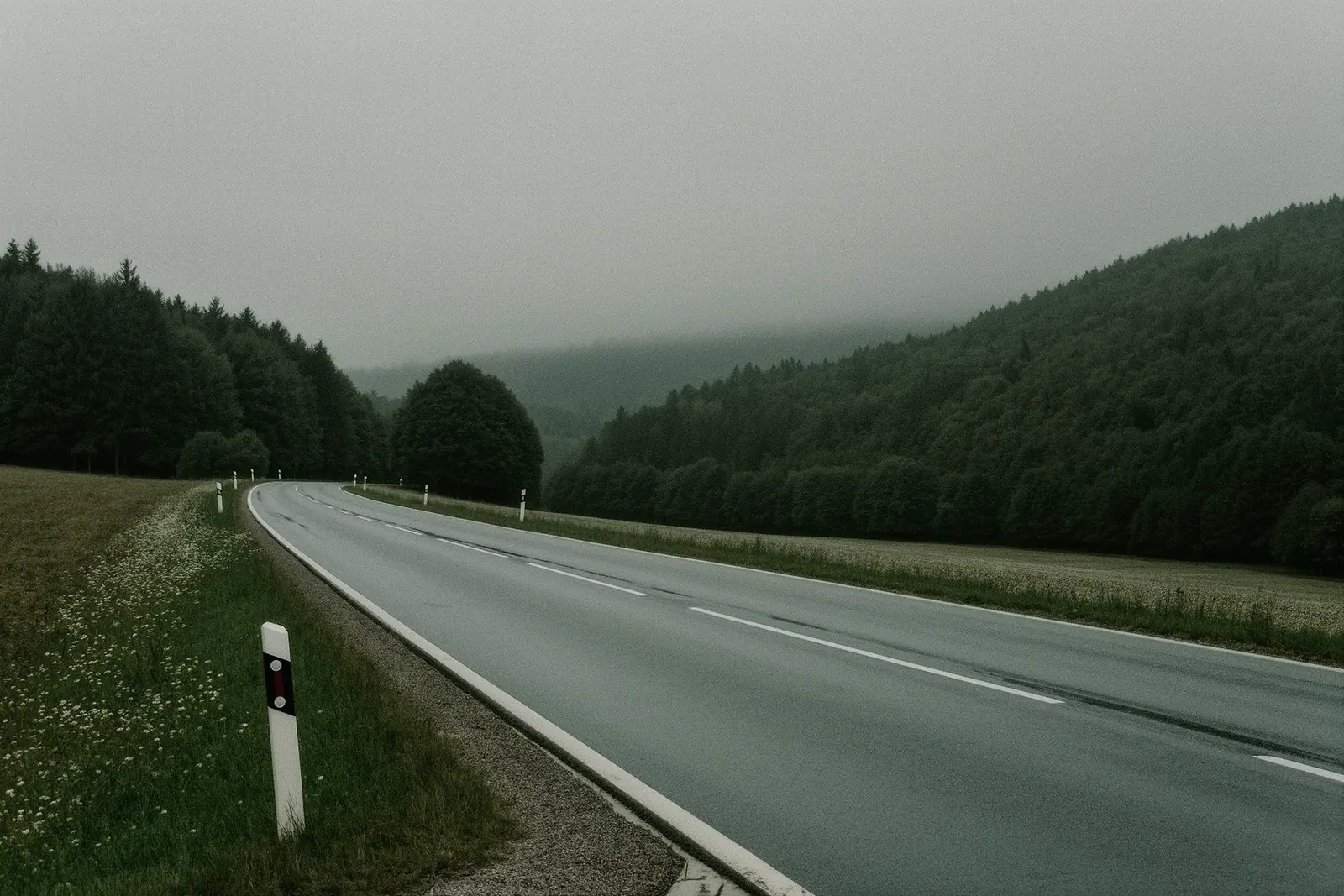
Look at a map of this stretch of river and one-way hire seems like an obvious idea. Bonn is thirty kilometres upstream, Düsseldorf forty-five downstream, Duisburg and Koblenz an hour either way. Four cities, one motorway corridor, and branches in all of them.
In practice, most of those journeys are the wrong shape for a one-way rental, and the reason is that the drive back is short. A one-way fee buys you out of a return leg. When the return leg is fifty minutes, that is not worth much.
The arithmetic, honestly
| Destination | Rough distance | Return drive | One-way usually worth it? |
|---|---|---|---|
| Bonn | 30 km | 45–60 min | No. Take a return hire |
| Düsseldorf | 45 km | 50–75 min | No, unless traffic is the deciding factor |
| Duisburg or Dortmund | 70–90 km | 1.5–2 hrs | Marginal. Compare the fee against a second day |
| Koblenz and the middle Rhine | 100–120 km | 2 hrs | Yes, if you are staying |
| Frankfurt or Mainz | 180–200 km | 3 hrs+ | Yes |
| Across a border | any | any | Only with written permission |
The middle rows are where the decision actually sits. Ask two questions. Does the return leg push you past the return time and into a second hire day? And is anyone in the party going back to Cologne anyway? If the answer to the first is no and the second is yes, a return hire wins almost every time.
The one case that reverses this cleanly is a move where the van arrives full and leaves empty and nobody is coming back. Then the one-way fee is buying a whole half-day of driving and fuel, and it is cheap.
Which bank, and the ferries
Both banks have a through route and they behave differently.
Going north, the left bank takes you past Worringen and Dormagen towards Neuss and the Düsseldorf approaches; the right bank runs through Leverkusen and Langenfeld. The right bank is generally faster and duller. The left bank passes Zons, which is a small walled town worth the two-minute detour if you are not in a hurry.
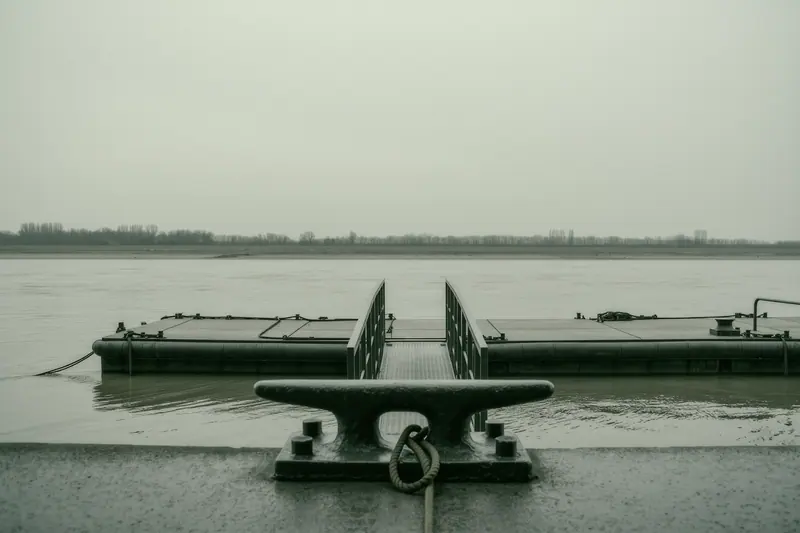
Between them sit several small car ferries. They are genuinely useful — a crossing saves a long loop to a bridge — but they come with conditions that matter for a van: length and weight limits, seasonal and daily timetables, and suspension in high water or fog. High water on this river is a winter and early spring event and it takes the low-lying approach ramps out of use before it touches anything else. Never plan a loaded van around a ferry; plan around the bridge and take the ferry if it happens to be running.
Going south, the left bank road towards Bonn runs past a large chemical and refinery complex around Wesseling, which is functional rather than scenic. The right bank through Porz and Niederkassel is slower and pleasanter. Beyond Bonn the valley narrows and the road becomes genuinely good, which is the point at which a one-way hire starts to justify itself.
The clauses that stop you
Three, and they all sit in the small print rather than on the booking page.
Class acceptance at the drop branch. A network shows you a branch on a map; it does not always tell you that the branch is a two-person office with four parking spaces and no ability to take a long-wheelbase van. Confirm the class, not just the location.
Opening hours. An out-of-hours key drop on a one-way rental is where people lose a full day’s charge. The vehicle is not checked in until someone opens the branch, and the contract runs until then in a good many agreements.
Borders. The Dutch border is about a hundred and fifty kilometres away and the Belgian border rather less, which makes a cross-border one-way look casual. It is not. Commercial vehicle contracts restrict international use much more tightly than car contracts, and a one-way drop in another country is often simply unavailable rather than expensive. Ask, in writing, before anything else is booked.
Before you set off from Cologne
Two Cologne-specific items.
If the van is being collected here for a move, the loading end still needs a legal length of kerb, and that is an application rather than an assumption — the procedure is in the kerbside permit article. Do not leave it because the van is only here for an hour.
If the van is being collected somewhere else and driven into Cologne, check the windscreen. A vehicle from a Dutch or Belgian branch will not usually carry a German environmental badge, and most of the inner city on both banks is inside the low-emission zone. That trap is worked through in driving into the low-emission zone.
One final option people overlook on this corridor: if the load is small and the distance is under about fifty kilometres, the flat riverside route is rideable. It is not a joke — the Rhine cycle route runs the whole way to Düsseldorf on made surface, and the case for doing it under your own power is set out in e-bike hire for the Rhine cycle route.
What to check before you book
- Get the one-way fee as a separate line on the quote. It is not always shown in the headline rate and it varies by direction as well as by distance.
- Confirm the drop branch is open at the hour you will arrive, and what an out-of-hours key return costs. It is commonly a full extra day.
- Ask whether the drop branch accepts that vehicle class. Small branches often take cars but not long-wheelbase vans.
- Check the mileage allowance against the actual route, including the return leg if you are considering a there-and-back hire instead.
- If the route crosses a border, get written confirmation that the vehicle may leave Germany and that the drop-off country is permitted. Van contracts restrict this far more often than car contracts.
- Verify the environmental badge if the vehicle is being collected outside Germany, before you drive into any inner city on the route.
Questions people actually ask
- Is one-way van hire from Cologne expensive?
It depends almost entirely on whether the branch network wants the vehicle at the other end. Within the same region a drop fee can be modest or occasionally waived; to a different part of the country it becomes a substantial line item, because someone has to repatriate the van. Ask for the fee before comparing rates, since it can exceed the hire itself on a short hop.
- Should I hire one-way to Düsseldorf or Bonn?
Usually not. Both are inside an hour of Cologne, so the return leg costs you fuel and roughly ninety minutes, against a drop fee that is often more than that is worth. One-way starts to make sense when the distance means the return drive would consume most of a second hire day, which on this corridor is somewhere beyond Koblenz or Duisburg.
- Can I take a hired van into the Netherlands or Belgium?
Sometimes, with written permission, and sometimes not at all. Cross-border restrictions are far more common on commercial vehicles than on cars, and a one-way drop in another country is a different question again from simply driving there and back. Get the answer in writing before you plan the move, because a refusal at the counter cannot be fixed on the day.
- Are there Rhine ferries that take a van?
Several small car ferries cross the river north of Cologne and they are a genuine shortcut between the banks. They carry limits on vehicle length, height and weight, they run to seasonal timetables, and they stop entirely when the river is high or in fog. Treat one as a pleasant option rather than as part of the plan, and have the bridge route ready.
- Does a one-way hire change the fuel policy?
It should not, but check. Full-to-full is normal and is still the arrangement you want; the difference is that you need a filling station near the drop branch rather than near home, and you should keep the timed receipt. Some networks apply a different policy to one-way rentals, which is worth reading rather than assuming.