GearKöln
Marquee and canopy hire for a Cologne courtyard
Nov–Mar
A rear courtyard in one of the older blocks is a good party space and an awkward tent site. What size structure fits, how ballast works on paving, what happens when you add sidewalls, and the late-winter wind that decides whether the canopy stays up at all.
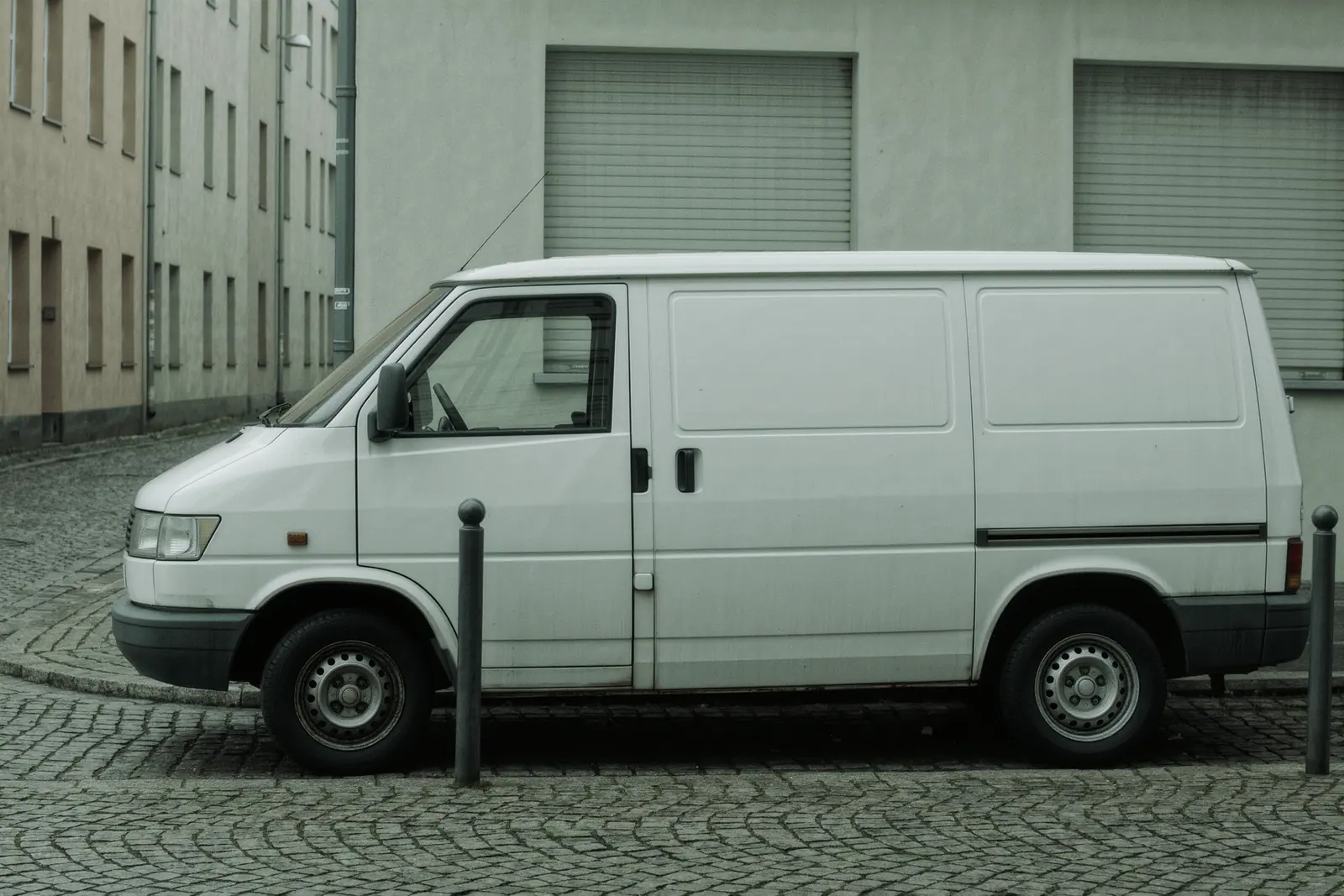
The courtyard behind a five-storey block in Ehrenfeld is about seven metres by ten, paved in concrete slabs, with a bin store in one corner, a cellar light well along one wall and a passage to the street that narrows to a bit over a metre past the doorway. It is a good party space. It is a difficult tent site, and the two facts have nothing to do with each other.
Nearly every problem with hiring a canopy here comes from measuring the yard and not the route into it. Frame sections, roof canvas and the ballast weights all arrive at the kerb and are carried through that passage by hand.
What actually fits
Start with the usable rectangle, not the courtyard. Subtract the bin store, the cellar entrance, any light well, the door to the stairwell and a clear route to it. What is left is usually smaller than people expect.
| Usable rectangle | Structure | Standing guests | Notes |
|---|---|---|---|
| 4 × 5 m | 3 × 3 pop-up | 15–20 | Light wind only, strike it overnight |
| 5 × 7 m | 4 × 6 frame | 35–45 | The common courtyard answer |
| 7 × 10 m | 5 × 8 frame | 60–80 | Needs a real crew and real ballast |
| 8 × 12 m | 6 × 10 frame | 90–120 | Check access for the longest frame section |
Then measure the passage: width at the narrowest point, height at the lowest, and any step. Frame sections come in fixed lengths and a six-metre bar does not turn a corner in a one-metre passage. Give the hire company the numbers and let them tell you what works; a good one will ask before you offer.
Ballast, because you cannot peg
On grass, a marquee is staked and guyed and the physics are simple. On a paved courtyard there is nothing to stake into, and there are services under the slabs you must not go through. So the structure is held down by weight at every leg.
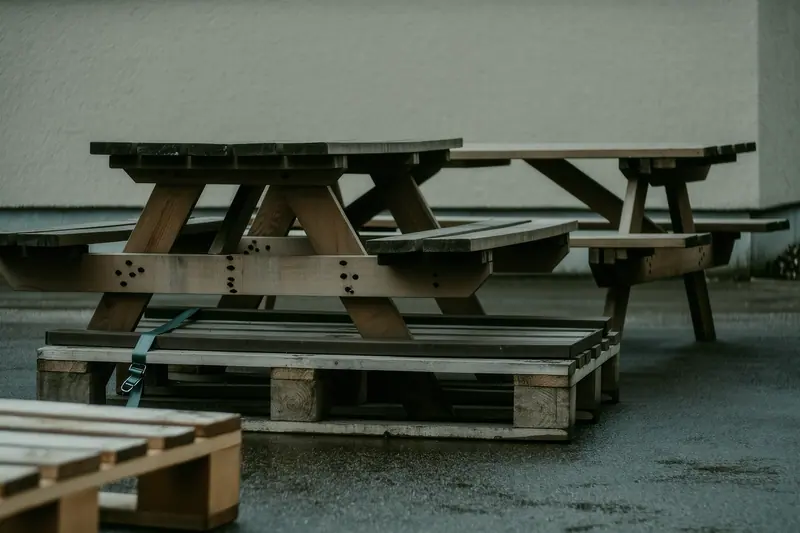
That weight is real: concrete blocks or filled barrels, several per leg, all of which arrive on the same pallet at the kerb and come through the same passage. Ask the hire company for the weight per leg and the number of items, then ask who carries them. If the answer is “the customer”, price a couple of extra hands into the day.
Never accept a compromise on this. An under-ballasted frame in a courtyard is not a slightly worse tent; it is a structure that can move as a whole in a gust.
Wind, which is the real variable in February
Late winter in the Rhineland is the windy season. Atlantic systems come through from January to March and they arrive with little warning at street level, which is where the courtyard makes things worse rather than better. Surrounded by tall walls, a yard does not shelter a structure so much as funnel and swirl the air over it, and downdraughts off a facade load a roof in ways an open field does not.
Three practical consequences. Ask for the frame’s rated wind speed and treat it as a limit, not a target. Agree a named person who watches the forecast and a time of day when the call is made. And decide before you book what happens to the event if the structure comes down — whether you move indoors, whether you shorten it, whether there is a hall to fall back to.
Sidewalls change the category
An open canopy is a roof. Put walls on three or four sides and you have an enclosed space, and several things change at once.
Escape routes become a genuine question, because the passage is now the only way out of a room. Heating changes: anything with an open flame under a closed structure is out, which rules out most patio heaters and pushes you to electric, which in turn runs into the same circuit limits as the dispense cooler. Condensation appears, because eighty people breathing in an enclosed tent in February produces a remarkable amount of water on the inside of the canvas.
And the permission question sharpens. Rules on temporary structures depend on size, on how long they stand and on whether the space is treated as public. Ask the city directly for your case; do not reason from what a neighbour did last year.
Water, neighbours and the morning after
A canopy roof does not absorb rain; it moves it to the edges and drops it in a line. Work out where that line falls. In a tight courtyard it is frequently over the bicycles, the bin store or a cellar light well, and a night of steady rain into a light well is a conversation you do not want to have on a Sunday morning. Ask for guttering between bays if you are hiring more than one, and reposition before the build rather than after.
The other neighbour question is sound. A paved yard between four walls is a very efficient reflector, and music that seems moderate at ground level arrives at third-floor windows on all four sides. Quiet hours and the exceptions that apply during the carnival days are set locally and are not the same everywhere in the city, so check the current position with the city rather than relying on the general assumption that anything goes during carnival week.
The single best thing you can do costs nothing: walk the whole route with the hire company’s crew leader on the phone, describing the passage, the step and where the ballast will stand. Ten minutes on the phone in January saves two hours in the yard in February.
What to check before you book
- Measure the courtyard, then measure the passage into it. The second number decides which structures are even possible.
- Ask how the structure is ballasted on paving, what each weight weighs, and who carries them in.
- Get the wind rating in writing and agree in advance who decides to take it down, and by when.
- Ask what changes once sidewalls go on: escape routes, heating restrictions and whether any approval is needed.
- Check where the run-off from the roof lands, and whether that is on a neighbour’s bicycles or a cellar light well.
- Confirm build and strike times, and whether the crew returns the next morning or the next working day.
- Tell your neighbours the dates before you book, not after the frame is up.
Questions people actually ask
- What size canopy fits in a typical Cologne courtyard?
Most rear courtyards in the older blocks take something between four by six and six by ten metres once you leave the bin store, the cellar entrance and the escape route clear. Work out the usable rectangle rather than the total area, then take a structure one size smaller than that rectangle so the crew can work around the edges during the build.
- Can a marquee be pegged into a paved courtyard?
No, and you should not let anyone try. Paving, concrete and cobbles all sit over services, and drilling or driving pegs into them is both a damage risk and often a breach of the building rules. The structure is held down by ballast instead, which means substantial weights at every leg, delivered and carried in with everything else.
- Do I need permission for a tent in a private courtyard?
For a small open canopy on private ground, usually not, but that changes as the structure gets larger or fully enclosed, and building rules on escape routes and access for emergency vehicles still apply. Requirements are set locally and depend on size, duration and how the space is used, so ask the city and the building management before you commit rather than afterwards.
- What happens if it is too windy?
The structure comes down, and that decision should be made by daylight rather than at nine in the evening. Hire companies rate their frames for a maximum wind speed and will usually specify the forecast threshold at which they strike. Agree who is watching the forecast, who makes the call, and what happens to the hire charge if the answer is no.