Two wheelsKöln
Cargo bike or van: moving a small flat inside the Ringe
All year
A van costs a day rate, a fuel bill, a kerbside reservation and a parking problem. A cargo bike costs a deposit and some legwork. For a one-room move of under three kilometres inside the Ringe, the arithmetic favours the bike more often than people believe — and there is a hybrid that beats both.
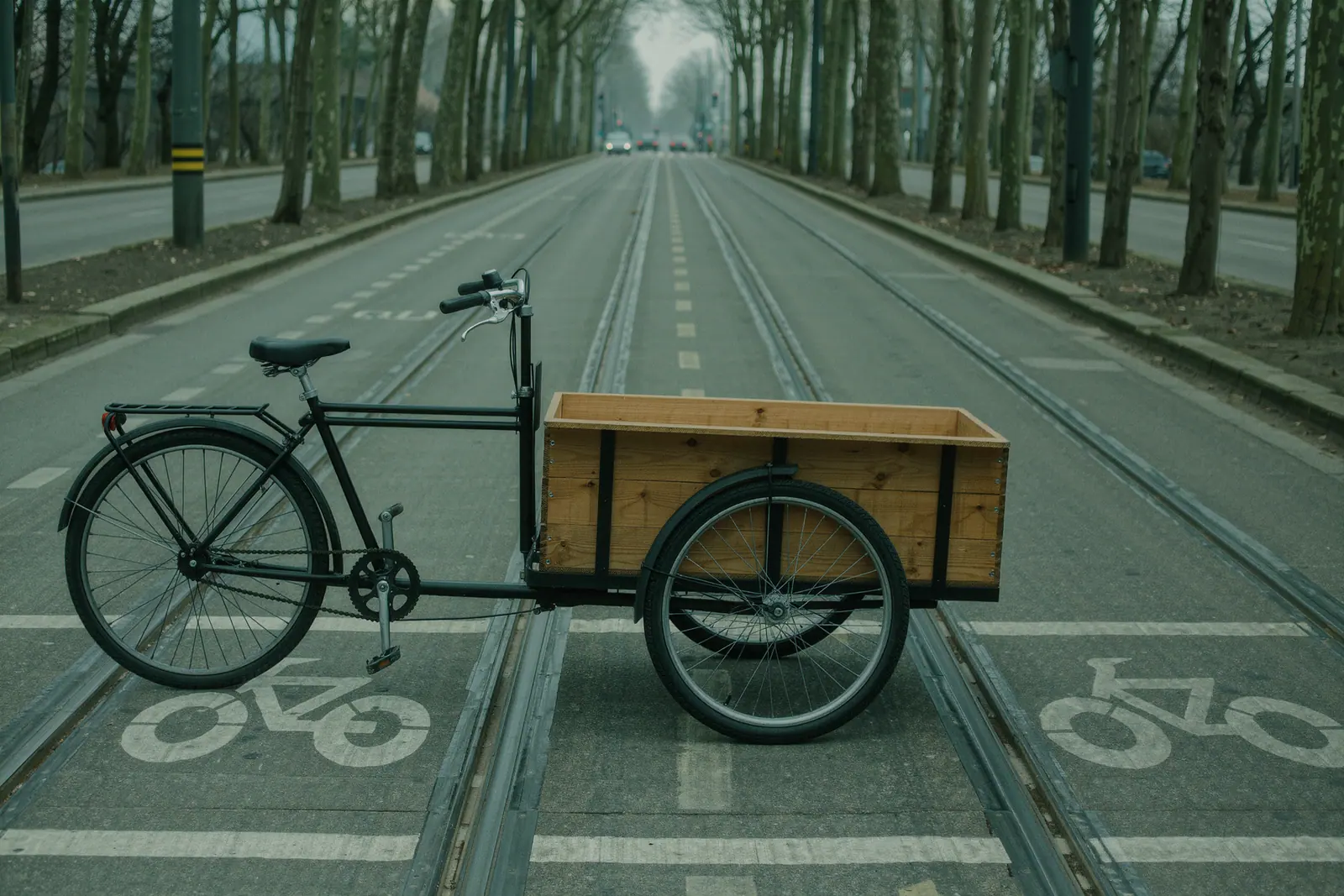
The default assumption for any move is a van, and inside the Ringe that assumption costs people a day and a couple of hundred euros they did not need to spend. Cologne’s central districts are dense, flat and close together. A move from the Belgian quarter to the Südstadt is under three kilometres. From Ehrenfeld to Neustadt is about four. These are distances where the vehicle with no parking problem starts to look very good.
This is not a romantic argument about cycling. It is an argument about trip counts.
The numbers
| Long-box cargo bike | Medium panel van | |
|---|---|---|
| Payload | 80–100 kg | 900–1,200 kg |
| Load volume | 0.3–0.5 m³ | 6–8 m³ |
| Boxes per trip | 4–6 | 30–40 |
| Round trip, 3 km, loaded | 20–30 min | 25–40 min with parking |
| Kerbside reservation | Not needed | Needed, several days notice |
| Where it parks at the far end | The doorway | Wherever is legal, possibly not near |
| Cost for a day | Deposit, or free from a lending scheme | Day rate, fuel, permit, deposit |
| Weather | Your problem | Not your problem |
| Stairs | Same either way | Same either way |
The row that decides it is the fourth one. A loaded three-kilometre round trip on a cargo bike is twenty to thirty minutes including carrying at both ends. A van doing the same trip is not much faster once you count getting it out of wherever it was parked and back into somewhere legal at the other end. The van’s advantage is entirely in the boxes-per-trip row — thirty to forty against five.
So the maths is simple. Count your boxes. Divide by five. If the answer is four or five trips, that is a comfortable afternoon on a bike. If it is fifteen, hire the van.
Where the bike wins outright
- Short distance, one room, no large furniture. A student room, a shared flat bedroom, a home office. Three or four trips over an evening and a morning.
- Spread over several days. A lending scheme bike borrowed for a weekend, or a shop hire for three days at a low rate, lets you move a flat in stages without any single hard day.
- Awkward addresses. A courtyard building with a narrow entrance, a pedestrian street, a block with no kerb space at all. The van cannot get near; the bike goes to the door.
- Carnival week. Not close. Vehicle access to the central districts collapses for several days and a van left on a route is towed — the detail is in van hire during carnival week.
Where the van wins outright
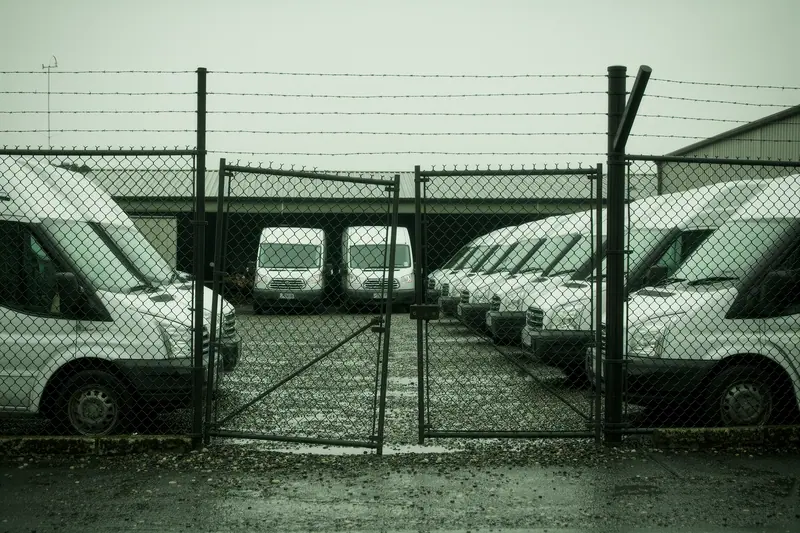
Anything with a washing machine in it. Anything with a wardrobe that does not dismantle. Anything over about five kilometres, because the trip time doubles and the trip count does not fall. Anything on a single fixed day, because a bike move needs a window rather than a slot. And anything where the destination is a storage unit, since those sit out on the industrial ring rather than in the central districts — the reasoning behind that is in a storage unit and a van on one booking.
The van also wins whenever the weather is bad enough to matter. An open box in persistent rain is a genuine constraint, not a minor discomfort, and a rain cover only does so much when you are loading and unloading in it.
Packing differently for a bike
A bike move is not a van move done slowly. It works when the load is packed for it, and that means smaller boxes than you would use otherwise.
Standard removal boxes are sized for a person to carry up stairs, which is roughly the right size for a cargo box too, but only four to six of them fit and they must not be able to shift. Two straps across the top of the load is the minimum, and a bike loaded high with nothing over it will redistribute itself at the first kerb.
Pack heavy low and forward, over the front axle rather than behind it. Books and crockery in the smallest boxes you have, because a full box of books is close to the sensible limit for one item on a bike. Lamps, plants, framed things and the contents of a wardrobe travel far better by bike than in a van, where they end up wedged against furniture. And leave the last trip for the things you want to carry yourself.
The hybrid, which is usually the right answer
For a one-bedroom flat inside the Ringe, the cheapest and least stressful version is not either of the above.
- Borrow or hire a cargo bike for three or four days in the week before the move. Take books, kitchen, clothes, bedding, plants and anything breakable over four or five evening trips.
- Hire a van for one day for the bed, the sofa, the appliances and whatever is left. With the small items gone, one medium van does it in a single load.
- Apply for one kerbside reservation, for that one day, rather than trying to hold a space over a weekend. The procedure and notice period are in the kerbside permit article.
That sequence pays for one van day instead of two, removes the panic of loading a whole flat between eight and six, and means the fragile things travel in a box you carried yourself rather than on top of a wardrobe.
The one thing to sort in advance is the bike parking at both ends. A long-box bike loaded with boxes cannot be left leaning on a wall while you carry a load upstairs, and a courtyard or a locked entrance hall at each address is worth arranging before the first trip. What to look for in the machine itself is in cargo bike hire for the Ringe.
What to check before you book
- Count the load in boxes before deciding. A long-box cargo bike takes four to six standard removal boxes per trip, and that number decides everything.
- Measure the largest single item. Anything that will not go through a doorway on its side will not go in a box on a bike.
- Check the route for stairs, bollards and building sites. A cargo bike route is not the same as a walking route.
- Look at the forecast honestly. Four hours of loading in February rain with an open box is a different job from the same one in May.
- If you use a neighbourhood lending scheme, book weeks ahead and read the collection window. Volunteer-run schemes have fixed handover times.
- For the van option, remember the kerbside reservation needs several working days of notice. That lead time often decides the choice on its own.
Questions people actually ask
- How much can a cargo bike actually carry?
A long-box two-wheeler will take somewhere around eighty to a hundred kilograms of payload and roughly a third to half a cubic metre of box volume, which in practice is four to six standard removal boxes or one small item of furniture strapped down. That is a fraction of a van load, so the question is never capacity per trip. It is how many trips you are willing to make.
- Where is the crossover point?
Roughly three kilometres and roughly one room. Under both, the bike usually wins because it has no parking problem, no permit, no fuel and no day rate. Over either, the trip count climbs and the van pulls ahead quickly. Add a washing machine, a wardrobe or a sofa and the van wins regardless of distance.
- Is a cargo bike really faster for a short move?
Door to door, over short distances in the central districts, frequently yes. The van spends time on parking, on the reservation, on one-way systems and on finding somewhere legal at the far end. The bike goes straight to the door both times. Over three kilometres with a good route, a loaded round trip takes about twenty-five minutes.
- What about during carnival?
The bike is the only thing that works. Vehicle access to the inner districts is heavily restricted for several days, and a hired van left on a procession route is towed. A cargo bike can be walked through a crowd if necessary and parked in a courtyard. It is the one week where the comparison is not close.
- Can I hire both?
That is usually the cheapest realistic answer for a one-bedroom flat. Take the cargo bike over several evenings for the boxes, books and kitchen, then hire a van for one day for the furniture and the appliances. You pay for one van day instead of two and you skip the second kerbside reservation.